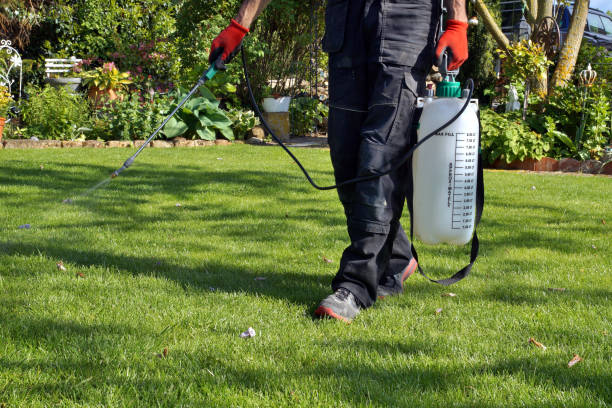
Keeping a lawn healthy requires more than mowing it regularly. Weeds can emerge when grass becomes thin, soil conditions change, moisture levels fluctuate, or seasonal conditions create opportunities for unwanted plants to grow. Because weed pressure can change throughout the year, maintaining a consistent approach to weed management can be more effective than waiting until weeds become established.
A year-round weed prevention plan focuses on regular lawn assessment, appropriate recurring treatments, fertilization, and adjustments based on changing conditions. Understanding common lawn weeds and the factors that encourage them can help homeowners make informed decisions about ongoing lawn fertilizing and weed control.
Weeds can appear at different times of the year because their growth is influenced by temperature, moisture, sunlight, soil conditions, and the condition of the surrounding turf. A lawn that appears relatively clear during one season may experience increased weed pressure as weather and growing conditions change.
Healthy grass can also play an important role in weed management. Dense turf can occupy available growing space, while thin or stressed grass can leave areas where weeds have greater opportunities to establish. Maintaining appropriate lawn nutrition and consistent care can therefore support a broader weed prevention strategy.
Ongoing monitoring is useful because weed problems can develop gradually. Instead of waiting until weeds become widespread, homeowners can monitor changes in lawn density, identify emerging weeds, and adjust recurring treatments when appropriate.
For homeowners looking for localized ongoing lawn care, a lawn weed control service Allen TX option can be considered as part of a recurring residential lawn maintenance routine.
Understanding different categories of weeds can make lawn monitoring easier. Weeds do not all have the same appearance or growth patterns, and identifying the type of weed can help determine the appropriate management approach.
Broadleaf weeds generally have wider leaves that make them visually different from grass. They can emerge within turf and compete with desirable grass for available space, moisture, light, and nutrients.
Their appearance can vary depending on the specific plant and growing conditions. Regular lawn inspection can help homeowners notice broadleaf weeds before they become more established across larger areas.
Grass-type weeds can be more difficult to identify because their appearance may resemble desirable turf. Differences in growth pattern, leaf structure, color, or texture can help distinguish unwanted grass-like plants from the surrounding lawn.
Because they can blend into turf, regular monitoring is particularly useful. Identifying changes early can help homeowners determine whether recurring weed management may be appropriate.
Seasonal weeds are influenced by changing weather and growing conditions. Some weeds may become more noticeable during warmer periods, while others can emerge when temperatures and moisture conditions shift.
This seasonal variation is one reason a year-round approach can be more useful than relying on a single treatment period. Weed pressure can change as the seasons progress.
Weeds can emerge for several reasons, and understanding the underlying conditions can help homeowners develop a more effective maintenance routine. Weed management is not simply about addressing visible plants. It also involves supporting conditions that encourage desirable turf growth.
Bare and thin areas create opportunities for weeds to establish. When turf density is reduced, more space becomes available for unwanted plants to grow.
Maintaining healthy grass coverage can help reduce these opportunities. Lawn conditions should therefore be monitored regularly, especially where grass appears weak, sparse, or uneven.
Soil conditions can influence grass growth and weed pressure. Nutrient availability, soil structure, moisture, and other growing conditions can affect how successfully desirable turf develops.
A recurring lawn maintenance approach can include evaluating these conditions and adjusting fertilization or other treatments when appropriate.
Water availability can affect both grass and weeds. Areas that remain excessively wet may create different growing conditions from areas that dry out quickly.
Proper watering and drainage practices can support healthier turf and help maintain more consistent growing conditions throughout the lawn.
Mowing frequency and practices can influence overall turf condition. Maintaining an appropriate mowing routine can support grass health, while inconsistent maintenance may contribute to uneven lawn conditions.
Lawn mowing should therefore be considered alongside fertilization and weed control when developing an ongoing lawn maintenance plan.
Temperature, rainfall, humidity, and seasonal changes can affect weed emergence. Because these factors are not constant throughout the year, weed management may need to change as conditions change.
A recurring approach allows lawn conditions to be monitored over time rather than treating weed management as a single seasonal concern.
Recurring weed control focuses on maintaining an ongoing schedule that can respond to changing lawn conditions. Rather than assuming that weed pressure remains constant, the process can involve regular assessment and appropriate follow-up treatments.
Regular inspection helps identify emerging weeds and changes in turf density. Identifying the types of weeds present can help determine whether additional management is appropriate.
Monitoring also provides an opportunity to notice recurring problems that may be related to lawn conditions such as thin grass or inconsistent moisture.
The appropriate treatment depends on the lawn, weed pressure, seasonal conditions, and other relevant factors. Recurring treatments should be selected according to the condition of the lawn rather than applied without considering current needs.
Weed management can require follow-up because new weeds may emerge as conditions change. A recurring schedule provides opportunities to reassess the lawn and determine whether additional treatment is appropriate.
Ongoing monitoring helps homeowners understand whether weed pressure is changing. It can also highlight areas where lawn density, nutrition, watering, or other maintenance factors may need attention.
Weed seeds and plants can emerge at different times depending on environmental conditions. Even when existing weeds are addressed, new weeds may appear later as temperatures, rainfall, soil conditions, and other factors change.
A single treatment therefore should not automatically be viewed as permanent weed prevention. Weed germination can occur over time, and different weed types may respond differently to seasonal conditions.
This is why recurring treatments can be useful for homeowners dealing with repeated weed growth. Regular monitoring provides opportunities to identify new growth and adjust the maintenance approach when necessary.
The goal of ongoing weed management is not to assume that weeds will never appear. Instead, it is to maintain a consistent strategy that responds to changing lawn conditions and helps manage weed pressure over time.
Fertilization and weed control address different aspects of lawn maintenance, but they can complement one another within a broader recurring plan. Supporting desirable grass growth can help maintain a healthier and denser turf environment.
Grass requires appropriate nutrients for healthy growth. When lawn nutrition is properly managed, desirable turf can maintain stronger growth and coverage.
Dense grass can occupy space that might otherwise be available for unwanted plants. Maintaining appropriate turf density can therefore support a broader weed management strategy.
Nutrient requirements can change throughout the year. A recurring fertilization schedule can help align lawn nutrition with seasonal growing conditions and the needs of the turf.
Fertilizing and weed control can be planned as complementary parts of ongoing lawn maintenance. Homeowners interested in understanding this relationship can explore how fertilizing and weed control work as part of a broader approach to maintaining healthy turf.
A year-round weed prevention plan should account for changing lawn conditions rather than relying on the same approach throughout every season. Consistent assessment and appropriate recurring maintenance can help homeowners respond as the lawn changes.
The lawn should be assessed throughout the year for changes in grass density, weed growth, moisture conditions, and overall appearance. Seasonal assessments can help identify developing issues before they become more difficult to manage.
Regular monitoring makes it easier to identify new weeds and recurring growth. Monitoring can also reveal whether certain areas of the lawn repeatedly experience weed pressure.
Recurring treatments can be scheduled according to lawn conditions and seasonal needs. The appropriate frequency should depend on the condition of the property rather than assuming that every lawn requires exactly the same treatment schedule.
A year-round approach can include appropriate fertilization to support grass growth and lawn density. Maintaining suitable nutrition can complement weed management by supporting desirable turf.
Weather, grass growth, weed pressure, and other conditions can change throughout the year. A flexible recurring plan can be adjusted when those conditions change.
For homeowners who want to understand how fertilization can fit into an ongoing lawn maintenance routine, this lawn fertilization schedule for healthy grass all year provides additional guidance.
Seasonal conditions influence both grass growth and weed activity. A year-round weed prevention plan should therefore recognize that the lawn may require different attention throughout the year.
Spring can bring increased plant growth as temperatures and moisture conditions become more favorable. Monitoring during this period can help identify emerging weeds and areas where turf may be thin.
Summer conditions can vary significantly depending on temperature, rainfall, and irrigation. Weed growth and grass stress may change during periods of heat or inconsistent moisture, making regular assessment important.
Autumn brings changing temperatures and growing conditions. Monitoring during this period can help identify weeds that emerge as seasonal conditions shift and prepare the lawn for the slower growth period ahead.
Winter lawn conditions depend on local temperatures and grass type. Even when desirable grass growth slows, homeowners should continue paying attention to lawn condition and emerging weed pressure when appropriate.
Repeated weed growth can indicate that occasional attention is not addressing the ongoing conditions affecting the lawn. When weeds repeatedly appear, homeowners may benefit from considering a recurring weed management approach.
Increasing bare patches can also be a concern because thin turf may create more opportunities for weeds to establish. Weeds that return after previous treatment may indicate that new growth is continuing to emerge as conditions change.
Thin or stressed grass can also contribute to weed pressure. If maintaining a consistent lawn appearance becomes increasingly difficult despite regular maintenance, it may be worth reviewing the lawn's overall fertilization and weed control routine.
Homeowners with limited time for regular lawn maintenance may find a recurring professional schedule easier to manage. Ongoing weed problems can also make professional lawn fertilizing and weed control worth considering, particularly when weed identification or treatment selection becomes difficult.
Larger residential lawns may require more consistent monitoring, especially when different areas of the property experience different growing conditions. A recurring maintenance schedule can make it easier to keep track of lawn conditions throughout the year.
A platform can also simplify the process of finding recurring residential services. EZeels is an online business and marketplace where services are provided by vendors, and users can directly book recurring services through the platform. Its residential service categories include lawn mowing, lawn fertilizing and weed control, swimming pool maintenance, carpet cleaning, and HVAC services.
A year-round weed prevention plan is an ongoing approach to lawn management that includes regular assessment, weed monitoring, appropriate recurring treatments, and lawn nutrition throughout changing seasons.
Treatment frequency depends on weed pressure, lawn conditions, seasonal changes, grass type, and the specific treatment approach. A recurring schedule should be adjusted according to the needs of the lawn rather than following an identical frequency for every property.
Fertilizing can support healthy grass growth and lawn density, which can contribute to broader weed management. However, fertilization and weed control address different lawn maintenance needs and should be coordinated appropriately.
Weeds can return because new plants may emerge as seeds germinate or seasonal conditions change. Existing weed growth and future weed emergence are separate concerns, which is why ongoing monitoring can be important.
Not every lawn has the same level of weed pressure or requires the same maintenance frequency. The need for recurring weed control depends on lawn conditions, seasonal growth, weed activity, and the homeowner's preferred maintenance routine.
A healthy lawn can face changing weed pressure throughout the year because weather, soil conditions, moisture, grass density, and seasonal growth all influence weed emergence. For this reason, effective weed management should focus on ongoing monitoring rather than assuming that a single treatment will prevent future growth.
A year-round weed prevention plan can combine seasonal lawn assessments, recurring treatments when appropriate, fertilization, and adjustments based on changing conditions. Supporting healthy grass growth while monitoring unwanted plants can create a more consistent approach to residential lawn maintenance.
Homeowners who prefer ongoing maintenance can explore recurring services through EZeels and directly book suitable residential services from vendors through the platform. A consistent maintenance routine can make it easier to respond to seasonal changes and maintain a healthier-looking lawn throughout the year.

 Login/Signup
